
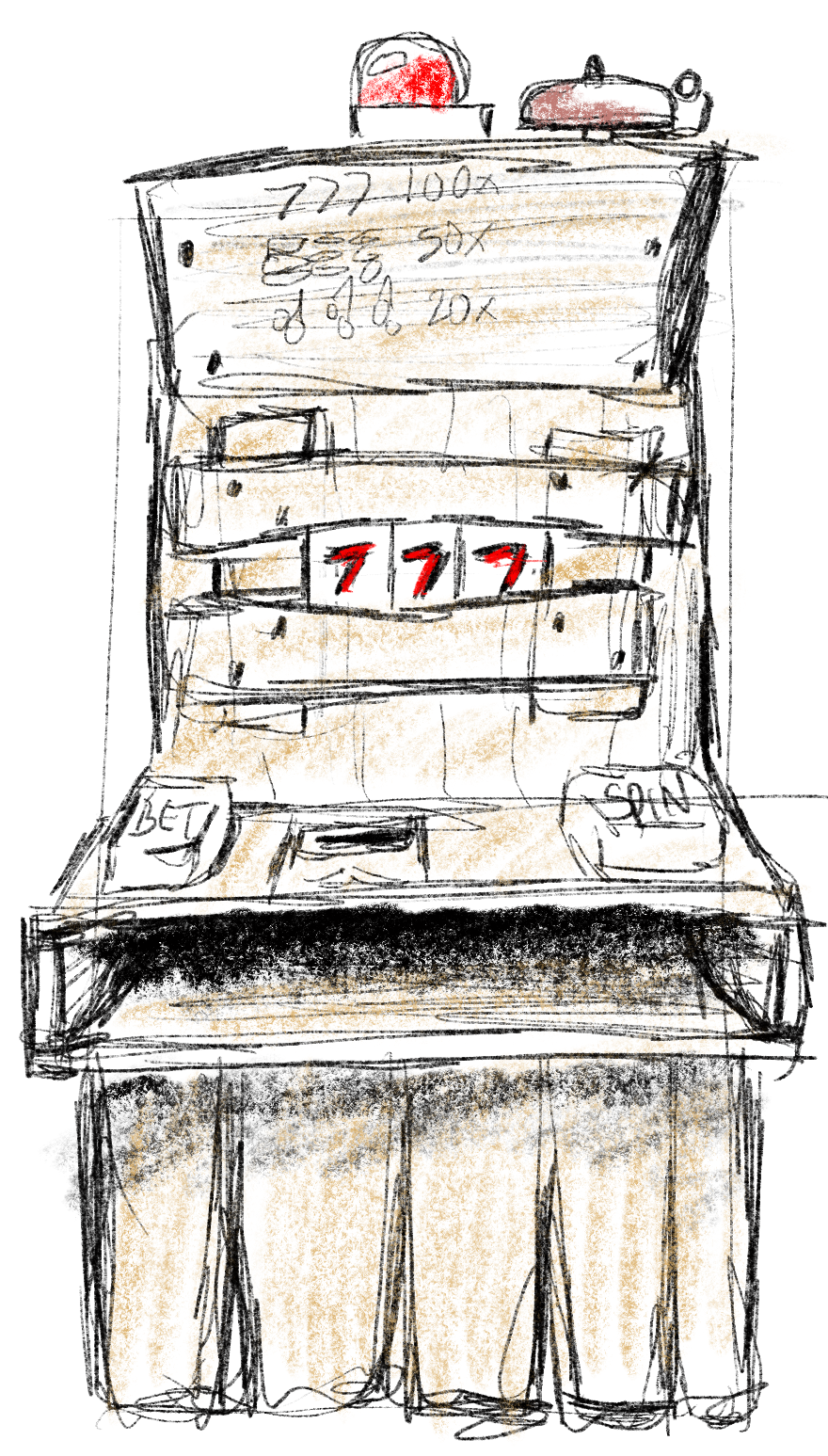
Head of Engineering
The Head of Engineering looked around the room at the leaders gathered here to discuss the new slot game they’ve taken on. There was the Creative Director. The Project Manager. The Producer. And herself. She thought, they all look weirdly like the same person… but then shook off the feeling and took a breath to begin.
Before she could start, the Producer said with just barely contained surprise…
“Godot? You’ve selected Godot to build this game on?”
Mentally changing gears, she answered, “Yes. You said you wanted it quickly, it’s 2D, and the game-side requirements are simple and direct. And we’re already beak-deep in another Godot game, so we have some advantage there in terms of speed and experience. I think it’s a good choice here.”
“Isn’t that for mobile games? Can it run on the web? The biggest selling point here is that we can put it on the website so people can play it for themselves.”
“Yes, it absolutely can.”
“When you worked on these kind of games before, what did you use, and why didn’t you use that?”
The Engineer blew a puff of air between pursed lips for a moment before answering. “Ha. The earliest stuff was built for DOS with the same ancient technology the original DOOM was built with. Later came Flash with ActionScript 2. The simple answer is that it’s all old tech that was never reliable to begin with, has no support now, and would actually make things much harder.
No, we want to use tech that is doing as much as it can for us before we even start to leverage it, and that means a modern game engine, and a familiar tech stack.”
Looking around the room again, the others seemed to accept that.
Continuing, “Anything flashier like Unity or Unreal puts a lot more work onto the Creative Department for asset creation, and like you said,” He looked at the Producer now. “the point here is showing off the game design, and technical design. Showing off the art or making a flashy game is secondary or even tertiary. There will still be opportunity for that.”
The Creative Director said, “I think it’s great. We can get there pretty quickly with that choice.”
Everyone else nodded and mumbled their agreement.
The Producer, also seeming to accept that, said, “Great! So show us what you have!”
The Engineer nodded, and spoke flatly: “Alexa, set the mood.” The lights faded from brightly lit to a soft and dim, color gradient, and the Engineer turned to the meeting room screen.

Gesturing at the diagram, “The game will be two distinct modules, each dividing their responsibilities across two internal layers.
One module, the RNG, will handle creating the plays. We’ll build it first with a straight RNG until we have the entire vertical built, then flesh that out into the actual bingo system.
The other module, the Presentation, will handle translating that game-play into the entertainment you see on the screen in the form of reel spins, bonuses, and the payout.
They’ll talk to each other through events, or signals as they’re called in Godot, for the first phase. We can break that out into an actual server/client communication situation later if necessary, but I really don’t think it’s required in order to demonstrate that the modules are independent of each other.”
She paused for a moment. The Project Manager was scribbling on her notepad.
“Any thoughts before I continue?”, the Engineer asked, still looking at the Project Manager.
Noticing, the PM said brightly, “No worries. It seems like there’s a few possible paths here, depending on whether or not we are meeting our requirements to show a deep understanding of gambling-specific tech design. Class II has some weird hoops because it’s itself a loophole to gambling laws.”
“Right. We can show this, but not need to spend an unnecessary amount of time building a REST server or something like that. We also don’t have to worry about security, in fact I’d like to encourage the user to look at network traffic, and if it’s easy enough to implement, just log the network traffic right to the game.”
The Creative Director perked up at this. “Oh! That’s right. I was already planning to go with a button you can press in the game that sort of, opens up the game cabinet and lets the user see all the ‘inner workings’. Here we can show some logging, network traffic, the ball call and bingo card, and present it like it’s the guts of the machine for the user to peruse.”
“I love that idea!” The Producer exclaimed.
“Me too,” the Engineer responded, though less enthusiastically. She then clicked to the next slide.

“For the game itself, we’ll use a state machine to manage all the states the machine can be in. I scribbled this together to start with, though I know it’ll expand a bit from here. But the advantage to this design rather than plopping everything into the root node script, is that once it’s set up, it’s trivial to add new functionality or behavior, and it’s incredibly neat and organized.”
The others looked at each other and shrugged. This didn’t really affect their parts of the equation, but it seemed to excite their illustrious Head of Engineering, and everyone enjoyed it when she was happy.
“Thank you, this all looks really good.” The Producer said, snapping her fingers in applause. “Okay Creative, it’s your turn. You have the lectern,”
The Creative Director stood to take the Engineer’s place in front.



Leave a Reply